School life
In a Argentina classroom
Many schools wear a white smock (guardapolvo) over their clothes.
Typical school day: Often morning or afternoon shifts (08:00-12:30 or 13:00-17:30).
School year: March to December.

South America · Country briefing
A child-friendly mission briefing for Thursday 19 November - capital, climate, school day, languages, fun facts, native animals, and five questions to ask the class on the other side of the world.
Climate in November: Late spring; mild to warm.
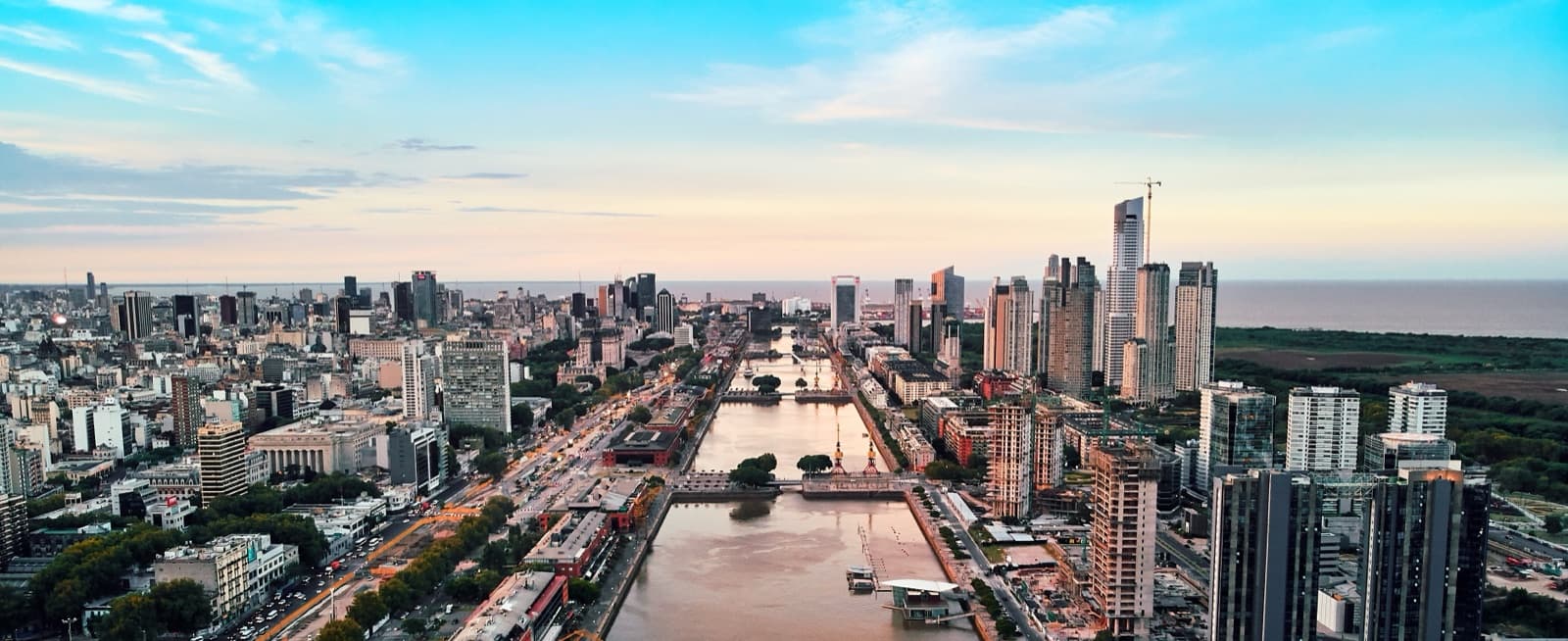
The capital
Buenos Aires
Photo · Wikimedia Commons
Fun facts
Tango
Dance born in Buenos Aires
Open lesson
Football
Three-time World Cup winners
Open lesson
Beef
World-famous asado barbecues
Open lesson
Aconcagua
Highest mountain in the Americas · 6,961m
Open lesson
Iguazu Falls
Shared with Brazil
Open lesson
Patagonia
Wild southern landscape
Open lesson
Tap any card to open a class-ready mini-lesson - for the teacher to walk through, or an older child to read aloud.
Native animals
Magellanic penguin
Nests on Patagonian coasts
Open lesson
Andean condor
Has a 3m wingspan
Open lesson
Guanaco
A wild relative of the llama
Open lesson
Pampas fox
Roams the grasslands hunting at dawn
Open lesson
Maned wolf
Looks like a fox on stilts
Open lesson
Tap any animal to open a class-ready lesson about it.
School life
Many schools wear a white smock (guardapolvo) over their clothes.
Typical school day: Often morning or afternoon shifts (08:00-12:30 or 13:00-17:30).
School year: March to December.
Greetings to learn
Five questions to ask
What not to assume
Culture
Food
Music
Sport
Festivals
Tap any chip to open a class-ready lesson - what it is, why it matters, fun facts.
Choose Argentinawhen you register - we’ll show you the time-zone feasibility.
We’d like to use Google Analytics cookies to see how this site is used and make it better. No advertising, and never any pupil data. How we use cookies.